• Press
  • Offices
  • Contact
  • Legal notice
  • LinkedIn
  • EN
    • DE
  • UPC
  • Firm
    • Main Focus
    • History
    • Guiding Principle
    • Code of Conduct
    • Awards and Rankings
  • Our Practice
    • Legal Areas
    • Industries
  • Our Team
  • News & Events
    • News
    • Events
    • UPC-Update
    • IP-Update
    • Publications
  • Career
  • Menu Menu
FIND EXPERTS
  • UPC
  • Firm
  • News & Events
    • News
    • Events
    • UPC-Update
    • IP-Update
    • Publications
    • B&B Bulletin
  • FIND EXPERTS
  • Contact
  • Our Practice
  • Career
  • Offices
  • EN
    • DE
  • Legal Areas
  • Industries
Blaues Bild in Puzzleoptik mit der Headline UPC Update und dem Logo von BOEHMERT & BOEHMERT

CoA clarifies damages in Bhagat/Oerlikon

29. January 2026/in UPC-Update Patent Litigation

In Bhagat/Oerlikon (UPC_CoA_8/2025, decision of December 9, 2025), the CoA clarifies various aspects of the legal principles guiding damages under the UPC framework.

The status quo

In comparison to the US, damages have led a niche existence in European patent litigation. It has been speculated in the legal literature (Veron, GRUR 2021, 392) that this is not due to differences in legal principles, as the feared treble damages had not been applied in the most spectacular awards in the US. Rather, the differences seem to primarily stem from the fragmented enforcement of patent rights pre-UPC, and thus also the limited coverage of damages claims.

For this reason, there is an expectation among UPC practitioners that with the UPC’s coverage of 18 EU-member states (and more EPC countries via the BSH judgement of the ECJ), damages might leave their niche existence in Europe behind. Decisions on damages therefore catch the eye.

Bhagat/Oerlikon and the fundamentals of damages calculation at the UPC

In Bhagat/Oerlikon (UPC_CoA_8/2025, decision of 9 December 2025), the CoA clarifies various aspects of the legal principles guiding damages under the UPC framework.

On the outset, the decision makes us recall that Art. 68 UPCA is a verbatim implementation of  Art. 13 of the Enforcement directive, and thus already, in its wording, diverges from the German national approach on damages, which stipulates that the patent proprietor can claim damages based on one of the three calculation methods (license analogy, infringer’s profits, lost profits), which are mutually exclusive.

Art. 68 UPCA instead proposes two methods of calculation, whereby the first one merges infringer’s profits and lost profits into a composite method, and adds “moral prejudice caused to the injured party by the infringement”. The CoA has held that moral prejudice requires reputational harm, and it appears likely that standard infringement actions will not suffice to fulfill this requirement (cf. recitals 26 to 30). “Moral prejudice” will therefore likely only play a minor role in future damages calculations. Furthermore, the decision holds that offerings alone will in most scenarios not constitute grounds for damages, and that actual sales will be required (cf. recitals 18 to 22).

Principles of liability

A declaration that an infringer is liable for damages requires knowledge of an infringement or reasonable grounds to know (Art. 68 para 1 UPCA). The CoA aligns with most of the national courts and holds that if the infringer is a direct competitor of the patent proprietor, it has a de facto obligation to monitor its competitors patent rights (recitals 23 to 25). This will have the likely result that competitors will be liable for damages in case of an infringement, regardless of whether they were aware of the respective patent or not, and that only downstream businesses like distributors might be able to argue that they had no reason to know of the respective patent (and are therefore not liable for damages).

For patent proprietors it is now important to recognize that under the UPC framework, infringers will in most scenarios be held liable for damages, and that the calculation of these damages is more flexible than under national frameworks. The UPC is therefore shaping up to be an ideal place for not only pursuing injunctions, but also damages.
 

https://www.boehmert.de/wp-content/uploads/2025/10/Beitragsbild-UPC-Update-2.jpg 598 650 Petra Hettenkofer /wp-content/uploads/2022/04/boehmert_logo.svg Petra Hettenkofer2026-01-29 19:12:552026-02-03 09:27:09CoA clarifies damages in Bhagat/Oerlikon
Dr. Alexander Thamer, Rechtsanwalt bei BOEHMERT & BOEHMERT

Berlinale Producers’ Brunch on February 17, 2026, with keynote speech by Dr. Alexander Thamer

26. January 2026/in Events

Medianet Producers’ Brunch on the occasion of the 76th Berlinale on the topic “AI is changing film production – but who actually sets the rules?”

As part of the Berlinale, medianet berlinbrandenburg, together with BOEHMERT & BOEHMERT and NORDEMANN, is once again hosting a morning event for the film and television industry at the Brandenburg State Representation.

This time, the discussion will focus on artificial intelligence and the questions of whether remuneration regulations can create fair standards for AI-supported workflows, how self-regulation and new contract models are developing, and what laws such as the AI Act, the German Civil Code (BGB), and the KUG really mean for the industry.

After a welcome address by Dr. Friederike Haase, State Secretary in the Ministry of Economic Affairs, Labor, Energy, and Climate Protection of the State of Brandenburg, and a keynote speech by BOEHMERT & BOEHMERT attorney Dr. Alexander Thamer, a high-caliber panel will discuss the impact of AI on film productions and new regulations.

Dr. Julian Waiblinger from NORDEMANN will moderate the discussion, while Prof. Dr. Jan Bernd Nordemann will conclude with a brief summary of the results.

Detailed information about the Producers’ Brunch 2026 and a registration option can be found here.

Event details at a glance

Date: February 17, 2024
Time: 10:00 a.m. – 12:30 p.m. | Doors open at 9:30 a.m.
Location: Landesvertretung Brandenburg beim Bund (Brandenburg State Representation to the Federal Government), In den Ministergärten 3, 10117 Berlin

https://www.boehmert.de/wp-content/uploads/2022/06/Thamer-Alexander-Portrait.jpg 667 1000 Petra Hettenkofer /wp-content/uploads/2022/04/boehmert_logo.svg Petra Hettenkofer2026-01-26 14:33:032026-01-26 17:08:50Berlinale Producers’ Brunch on February 17, 2026, with keynote speech by Dr. Alexander Thamer
Blaues Bild in Puzzleoptik mit der Headline UPC Update und dem Logo von BOEHMERT & BOEHMERT

Serving Court Documents in China: Lessons from a UPC Case in Milan

21. January 2026/in UPC-Update Patent Litigation, Patents and Utility Models

Serving court documents on Chinese defendants remains a challenge in UPC litigation. A recent decision by the Milan Local Division of the EPO points to possible solutions.

Background: A Cross-Border Service Challenge

In December 2025, the Milan Local Division of the Unified Patent Court (UPC) issued a notable decision (Case UPC_CFI_766/2024) addressing the difficulties of serving court documents on companies based in China. The case involved a patent infringement claim by Cardo Systems against two defendants, one in Hong Kong and one in mainland China. While the Hong Kong-based defendant was ultimately served on a second attempt, service on the Shenzhen (PR China)-based company failed twice due to objections raised by Chinese authorities. This situation highlighted the procedural hurdles and international complexities when delivering UPC legal documents abroad under the Hague Service Convention.

The Hague Service Convention and UPC Rules of Procedure

When serving defendants outside the EU (and outside the UPC’s member states), the UPC relies on the Hague Service Convention as the primary mechanism for cross-border notification. The UPC’s Rules of Procedure explicitly integrate the Hague Convention’s framework, ensuring a uniform approach to service across all participating states. In fact, the Milan court emphasized that Article 15(2) of the Hague Service Convention applies fully in the UPC system, regardless of any additional national requirements, because the UPC has a uniform service regime and all member states have effectively adopted the Convention’s rules by agreeing to the UPC Rules. In practice, this means that if a document needs to be served in a non-UPC country like China, the serving party must follow Hague Convention procedures (e.g. through the designated Central Authority) before resorting to any alternative methods.

Political and Formalistic Obstacles: The China Dilemma

In the Milan case, the Chinese Central Authority twice refused to execute service on the Shenzhen defendant for an unusual reason: the court papers referred to the first defendant’s address as “Hong Kong” instead of “Hong Kong, China”. This demand – essentially a political/semantic issue – created a serious obstacle to serving the lawsuit. The UPC court noted that such a refusal was based on a purely formalistic ground, since the first defendant in Hong Kong had already been successfully served (making the address wording issue moot). More importantly, the court held that foreign authorities have no right to demand changes to the content of judicial documents. Quoting a prior UPC decision, the Milan judge stressed that “censorship of content based on political expediency has no place in the Hague Service Convention”, and it is not the role of a receiving state’s agency to “censor or edit the content of the document to be served”. How a claimant describes a defendant’s address is up to the claimant; a Central Authority cannot block service over terminology or political nuances. The Chinese authority’s insistence on the phrase “Hong Kong, China” was therefore deemed an improper basis to refuse service.

The Milan Court’s Solution: Valid Service Despite Refusal

Facing a “serious and final” refusal by China’s authorities to effect service, the Milan Local Division took a pragmatic approach. The court declared that the steps already undertaken by the claimant to serve the Chinese defendant – transmitting the documents via the Hague Convention process – were sufficient to constitute legally valid service, even though the defendant had not physically received the papers. Under the Hague Convention (Article 15) and UPC rules, once all reasonable formal attempts have been made and a foreign authority definitively rejects or fails to complete service, the court may proceed without further delay. The Milan decision confirmed that no additional attempts were necessary in this case, as requiring more tries or waiting longer would be futile.

Crucially, the court refused to alter or “water down” the content of the documents to satisfy the foreign authority, citing the independence and impartiality of the judiciary. Instead, the judge treated the Chinese authority’s non-cooperation as a breach of the Hague Convention obligations and moved forward by issuing an order to validate service. In the court’s words, “the steps already taken…constitute legally valid service. Otherwise, service would be impossible.”

Alternative Means: Notice by Publication on the UPC Website

To further safeguard the defendant’s due process rights despite the lack of formal service, the Milan Local Division employed an unconventional backup method: publication of a notice on the UPC’s website. The court ordered that a reference to its decision (including the party names and case number) be posted on the publicly accessible UPC website, effectively as a form of public notice. This way, even though official service through Chinese channels failed, the defendant could still become aware of the ongoing proceedings by seeing the announcement online. The court explicitly stated that formal service of the decision itself was unnecessary (and would have been doomed to fail for the same reasons) once this online publication was made. This approach — essentially service by public notification — is provided for in the UPC framework as a last resort when all formal avenues are blocked.

Practical Takeaways for UPC Litigation

  • Plan for Delays and Obstacles: Serving defendants in non-EU countries like China can be fraught with unexpected hurdles. Be prepared for potential delays and formal objections (in this case, it took nearly a year of efforts and a court order to resolve service).
  • Adhere to Hague Convention Formalities: Ensure full compliance with Hague Service Convention requirements (proper translations, forms, addresses, etc.) when serving abroad. Minor errors or deviations can prompt refusals, as seen with the “Hong Kong” nomenclature issue. While the UPC won’t require altering your documents to appease foreign authorities, anticipating local sensitivities (e.g. naming conventions) might save time.
  • UPC Rules Require Exhaustion of Official Channels: The UPC will generally insist that you exhaust formal service methods under Hague (or applicable international channels) before seeking alternative means. Attempts to bypass official procedures (like direct email or local publication at the court) will not be approved “at this stage” unless convention routes truly fail.
  • Courts Won’t Tolerate Unreasonable Refusal: If a foreign state’s authorities refuse service for improper reasons, the UPC is prepared to declare service effected regardless. In Milan, the judge treated the Chinese authority’s stance as contrary to the Convention and moved on. Practitioners can take comfort that good-faith attempts to serve won’t be in vain due to politics or formalism.
  • Alternative Service by Court Order: The Milan case demonstrates that the UPC can resort to alternative measures like publicizing the case on the court’s website when standard service is impossible. Lawyers should be aware that a defendant who evades service (or whose country obstructs it) may still be bound by proceedings that continue in their absence. For defendants outside Europe, it’s wise to monitor UPC publications and not rely on local authorities to forward documents.
  • Looking Ahead: This decision fits neatly with the principles already developed by the Court of Appeal in CoA_69/2024, order of 9 July 2024. It signals that the UPC will strike a balance between respecting international service treaties and ensuring that litigation isn’t derailed by external roadblocks. In future cases involving non-EU parties, we can expect the UPC to take a similar pragmatic approach, upholding the integrity of its process while using creative solutions (like website notices) to give defendants a fair chance to respond.


https://www.boehmert.de/wp-content/uploads/2025/10/Beitragsbild-UPC-Update-2.jpg 598 650 Petra Hettenkofer /wp-content/uploads/2022/04/boehmert_logo.svg Petra Hettenkofer2026-01-21 14:25:512026-01-21 14:31:18Serving Court Documents in China: Lessons from a UPC Case in Milan
Dr. Eckhard Ratjen, Attorney at Law at BOEHMERT & BOEHMERT

No likelihood of confusion with descriptive root element CRAFT – Article by Dr. Eckhard Ratjen in GRUR-Prax 1/2026

20. January 2026/in Publications Trade Marks

According to a decision by the German Federal Patent Court (BPatG), there is no likelihood of confusion between the signs TECH-CRAFT and TOOLCRAFT, even though the goods are identical.

In his article in GRUR-Prax 1/2026, BOEHMERT & BOEHMERT partner and attorney at law specializing in intellectual property, Dr. Eckhard Ratjen, discusses the BPatG decision of October 14, 2025, 26 W (pat) 526/20, GRUR-RS 2025, 33163 – TECH-CRAFT vs. TOOLCRAFT.

According to this ruling, the opposition filed by the proprietor of the EU word mark TOOLCRAFT against the registration of the word/figurative mark TECH-CRAFT in Class 8 on the grounds of likelihood of confusion was not upheld; therefore, the opponent’s appeal was unsuccessful.
The BPatG saw no likelihood of confusion between the TOOLCRAFT trademark and the younger TECH-CRAFT word/figurative mark. Although the goods (hand tools) were identical, TOOLCRAFT’s distinctiveness was considered only average because the components “TOOL” and “CRAFT” have descriptive connotations. The opponent could not prove increased distinctiveness through use due to a lack of specific information on market shares, use, and recognition. Additionally, the signs differed sufficiently in terms of sound, appearance, and meaning. Furthermore, “CRAFT” was deemed unsuitable as the root component of a trade mark family.

Dr. Eckhard Ratjen concludes his article with detailed practical advice and the conclusion that the decision of the Federal Patent Court underscores the high requirements for proving the increased distinctiveness of a trade mark and for demonstrating the existence of a series of signs and their use.

Registered users of GRUR-Prax can download the full article in German by Dr. Eckhard Ratjen here.

https://www.boehmert.de/wp-content/uploads/2022/06/Ratjen-Eckhard-Portrait-web.jpg 667 1000 Petra Hettenkofer /wp-content/uploads/2022/04/boehmert_logo.svg Petra Hettenkofer2026-01-20 17:22:542026-01-21 09:44:18No likelihood of confusion with descriptive root element CRAFT – Article by Dr. Eckhard Ratjen in GRUR-Prax 1/2026

BOEHMERT & BOEHMERT appoints four new partners

19. January 2026/in Press

Munich, 19 January 2026 – IP law firm BOEHMERT & BOEHMERT is starting 2026 by expanding its partnership with four patent attorney experts. With immediate effect, Dr. Hanno Flentje and Dr. Michael Lohse at the Munich site, Jan Göring in Bremen and Dr. Adrian Steffens in Berlin will take on joint responsibility for the firm’s technical fields.

“With the appointment of Hanno Flentje, Jan Göring, Michael Lohse and Adrian Steffens to our partnership, our firm is exceptionally well positioned for the future. All four are recognized experts in their respective fields, bringing outstanding technical know‑how in forward‑looking areas of technology and a clear understanding of our clients’ needs. At the same time, this step marks a continuation of our generational transition and secures the exceptional quality of our advice across multiple locations for the decades to come,” says Dr. Daniel Herrmann, Chair of the Business Development Committee at BOEHMERT & BOEHMERT.

Dr. Hanno Flentje, based in Munich, specializes in physics, semiconductor technology and optics. He also works extensively in the fields of quantum technology, artificial intelligence, electrical engineering, manufacturing and information technology, as well as consumer goods. He is responsible for drafting patent applications and prosecuting them before the German Patent and Trade Mark Office (DPMA) and the European Patent Office (EPO). In addition, he regularly represents clients in opposition, nullity and patent litigation proceedings.

From Bremen, Diplom‑Ingenieur Jan Göring advises international corporations, medium‑sized enterprises and start‑ups on the full spectrum of IP management — from tailored patent strategies to the development and stewardship of comprehensive IP portfolios. Drawing on several years of experience as in‑house patent counsel, he brings strong practical industry insight and covers the entire field of mechatronics with a particular focus on mechanical engineering. He also dedicates his work to advancing concepts for modern decarbonized mobility and developing technical solutions for disaster response and civil protection.

Diplom‑Physiker Dr. Michael Lohse focuses primarily on drafting patent applications and prosecuting them before the DPMA and the EPO. He also represents clients in patent infringement and validity proceedings, including before the Unified Patent Court. His technical expertise spans physics, optics, medical technology, semiconductor and electrical engineering, IT and quantum technology. In addition, he is involved in projects within the automotive sector. Alongside globally operating corporations, he advises small and medium‑sized enterprises as well as university spin‑offs.

New partner Dr. Adrian Steffens supports companies in filing German and international patents and utility models and represents them in opposition, nullity and patent litigation proceedings. His technical expertise includes software and IT, quantum technology, physics, signal processing and medical technology. He has been part of the BOEHMERT & BOEHMERT team in Berlin since 2018 and – like all newly appointed partners – is authorized to represent clients before the Unified Patent Court.

About BOEHMERT & BOEHMERT

With around 90 specialized IP experts, including 23 patent partners and 12 attorney at law partners, BOEHMERT & BOEHMERT is one of the largest intellectual property law firms in Europe. With six locations in Germany, complemented by offices in Alicante, Paris and Shanghai, the firm provides comprehensive, cross‑border IP advice supported by an international network.

Images

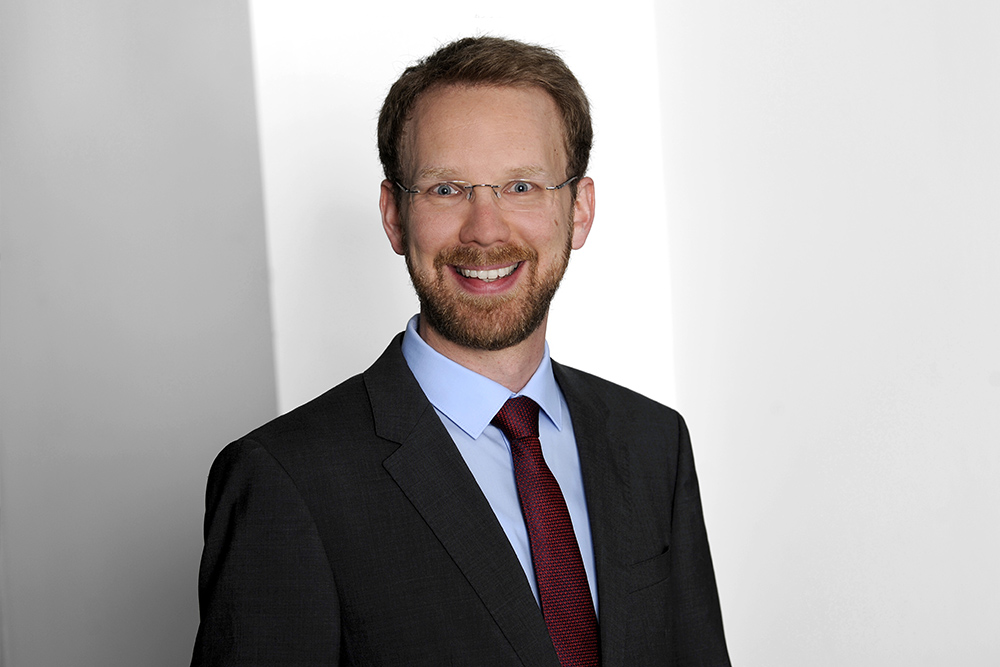
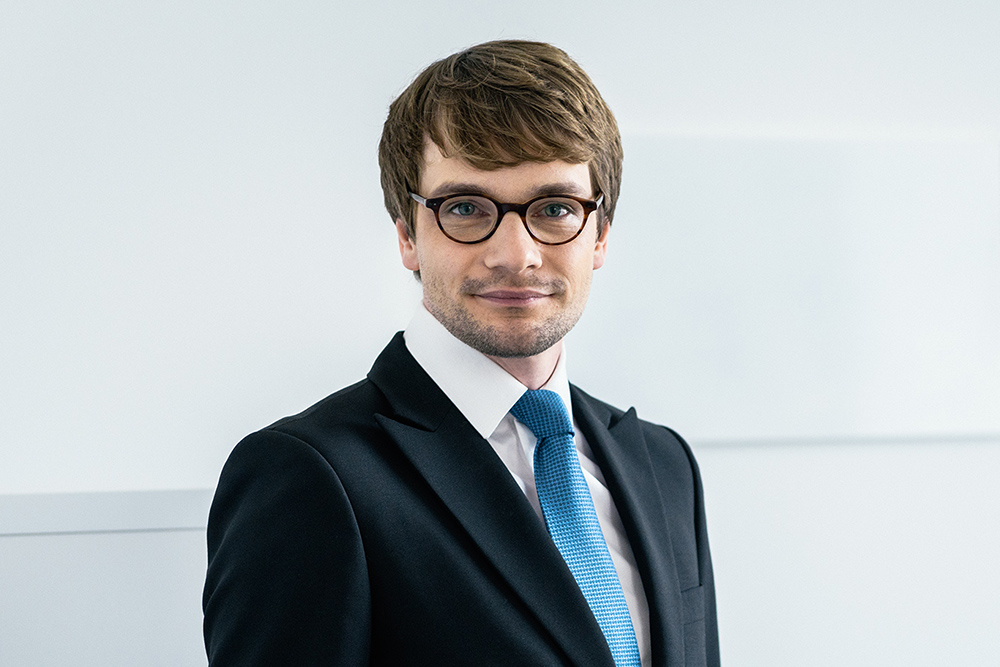
Portrait of Patent Attorney Dr. Hanno Flentje, BOEHMERT & BOEHMERT Munich
Portrait of Jan Göring, Patent Attorney at BOEHMERT & BOEHMERT in Bremen
Portrait of Dr. Michael Lohse, Patent Attorney at BOEHMERT & BOEHMERT Munich
Portrait of Dr. Adrian Steffens, Patent Attorney at BOEHMERT & BOEHMERT Berlin
/wp-content/uploads/2022/04/boehmert_logo.svg 0 0 Lucia Biehl /wp-content/uploads/2022/04/boehmert_logo.svg Lucia Biehl2026-01-19 10:45:142026-01-19 14:10:59BOEHMERT & BOEHMERT appoints four new partners
Front page of the BOEHMERT & BOEHMERT India IP Seminars 2026 flyer, promoting patent and trademark presentations

IP seminars in India – February 3 to 6, 2026, in three major cities

15. January 2026/in Events Patents and Utility Models

BOEHMERT & BOEHMERT IP Seminars in India

February 3 to 6 in Delhi, Pune, and Mumbai

Once again, this year the BOEHMERT & BOEHMERT partners Silke Freund, Dr. Markus Engelhard, Dr. Carl-Richard Haarmann and Dr. Daniel Herrmann are going on a roadshow in India. Those interested can look forward to the following topics at events in the country’s three major cities: Delhi, Pune and Mumbai.


Program for download

Program

  • 2.5 Years of UPS – a Fast Growing System
    Dr. Carl-Richard Haarmann, Attorney at Law, Munich/Dusseldorf/Shanghai
  • Second Medical Use Claims revisited
    Dr. Markus Engelhard, Patent Attorney, Munich
  • Patents on Software and AI in Europe?
    Dr. Daniel Herrmann, Patent Attorney, Frankfurt a. Main/Munich
  • Trademark Protection in the European Union – Recent Developments
    Silke Freund, Attorney at Law, Munich

Details about the venues, times and registration can be found below.
Please note that the seminar is free of charge and will be held in English. It is aimed at managing directors, senior IP lawyers and other decision-makers within companies.

Veranstaltungsorte & Zeiten

  • Delhi, India International Centre, February 3, 2026, 9:30 am – 3:00 pm
    Conference Hall No. 1, 40 Max Mueller Marg, Lodhi Gardens, Lodhi Estate, New Delhi, Delhi 110003
  • Pune, Lemon Tree Premier, February 4, 2026, 9:30 am – 3:00 pm
    City Center, 15 & 15A, Connaught Road, Modi Colony, Pune, Maharashtra 411001
  • Mumbai, Ramada Plaza, February 6, 9:30 am – 3:00 pm
    Juhu Beach, Juhu Tara Rd, next to Shivaji Maharaj Statue, Nazir Wadi, Theosophical Housing Colony, Juhu, Mumbai, Maharashtra 400049

On each of the above dates, we invite all participants to join us for lunch from 1:00 p.m. to 2:00 p.m..

Registration

Please use the following local contact to register. We look forward to seeing you there!

Mr. Suhayl Abidi (IPR Associates)

E-Mail: iprassociates[at]gmail.com
WhatsApp/mobile: +91 93240 53831

https://www.boehmert.de/wp-content/uploads/2026/01/Cover-Flyer-IP-Seminars-India-2026.jpg 915 425 Petra Hettenkofer /wp-content/uploads/2022/04/boehmert_logo.svg Petra Hettenkofer2026-01-15 13:20:052026-01-20 10:15:29IP seminars in India – February 3 to 6, 2026, in three major cities
Prof. Dr. Heinz Goddar, Patent Attorney at BOEHMERT & BOEHMERT

Prof. Dr. Goddar added to the list of mediators and members of the PMAC arbitration tribunal

1. January 2026/in News Patents and Utility Models

From January 1, 2026, Prof. Dr. Heinz Goddar will act as a neutral person for the PMAC, serving as a mediator, a member of the arbitration tribunal and a sole and emergency arbitrator.

The new year 2026 will see the launch of the Patent Mediation and Arbitration Centre (PMAC) of the Unified Patent Court (UPC). The PMAC is intended to offer confidential, efficient solutions for complex patent and SEP disputes, thus serving as a flexible alternative to traditional litigation.

Effective January 1, 2026, BOEHMERT & BOEHMERT partner and patent attorney Prof. Dr. Heinz Goddar is officially listed as a neutral person of the PMAC for the positions of mediator, associate mediator, member of the arbitral tribunal, and sole and emergency arbitrator.

Prof. Dr. Heinz Goddar has thus committed to making his expertise available to the PMAC for a period of five years as needed – for assignments, services, including information events, and training courses.

Further information on the Patent Mediation and Arbitration Centre (PMAC) may be found in an article co-authored by Prof. Dr. Goddar in Les Nouvelles, December 2025, entitled “Potential of the Patent Mediation and Arbitration Centre (PMAC) of the Unified Patent Court (UPC)”.

https://www.boehmert.de/wp-content/uploads/2022/06/Goddar-Heinz-Portrait.jpg 667 1000 Petra Hettenkofer /wp-content/uploads/2022/04/boehmert_logo.svg Petra Hettenkofer2026-01-01 08:00:022025-12-29 13:49:58Prof. Dr. Goddar added to the list of mediators and members of the PMAC arbitration tribunal

Latest posts

  • Christian W. Appelt, Patent Attorney at BOEHMERT & BOEHMERT
    Christian W. Appelt to speak at the 24th Dusseldorf Patent Law Days on March 20, 20265. February 2026 - 17:41
  • Dr. Julian Wernicke, Attorney at Law at BOEHMERT & BOEHMERT
    Greenwashing or permissible environmental claims?2. February 2026 - 14:17
  • Blaues Bild in Puzzleoptik mit der Headline UPC Update und dem Logo von BOEHMERT & BOEHMERT
    CoA clarifies damages in Bhagat/Oerlikon29. January 2026 - 19:12

Categories

Archive

Menu

  • Firm
  • Our Practice
  • Career
  • News & Events
  • FIND EXPERTS
  • LinkedIn

Informations

  • Press
  • Contact
  • Legal notice
  • Data Protection
  • General Terms and Conditions
  • Contact

Legal Areas

  • Employee Inventions
  • Data Protection
  • Designs
  • Domains
  • Information Technology
  • Anti-Trust
  • Licensing
  • Trade Marks
  • Patent Valuation
  • Patents & Utility Models
  • Patent Litigation
  • Product Piracy
  • Copyright
  • Unfair Competition

© Copyright 2026– BOEHMERT & BOEHMERT

Scroll to top Scroll to top Scroll to top