• Press
  • Contact
  • Offices
  • Legal notice
  • LinkedIn
  • EN
    • DE
  • UPC
  • Firm
    • Main Focus
    • History
    • Guiding Principle
    • Code of Conduct
    • Awards and Rankings
  • Our Practice
    • Legal Areas
    • Industries
  • Our Team
  • News & Events
    • News
    • Events
    • UPC-Update
    • IP-Update
    • Publications
    • Subscription B&B Bulletin
  • Career
  • Menu Menu
FIND EXPERTS
  • UPC
  • Firm
  • News & Events
    • News
    • Events
    • UPC-Update
    • IP-Update
    • Publications
    • B&B Bulletin
  • FIND EXPERTS
  • Contact
  • Our Practice
  • Career
  • Offices
  • EN
    • DE
  • Legal Areas
  • Industries
Portrait of Stella Euchner, Attorney at Law at BOEHMERT & BOEHMERT

The German Distance Learning Protection Act (FernUSG): Current Case Law and Practical Impacts

24. March 2026/in IP-Update

The German State Central Office for Distance Learning (ZFU) is also of central importance for modern online formats and B2B offerings.

In its ruling of June 12, 2025 (III ZR 109/24), the Federal Court of Justice (BGH) significantly expanded the scope of the German Distance Learning Protection Act (FernUSG) to include digital training, coaching, and mentoring services, while also clarifying that the Distance Learning Protection Act is not limited to traditional distance learning courses. The sole determining factor is whether the statutory elements are met. At the same time, the BGH confirmed that the scope of protection is not limited to consumers, but that contracts with companies, freelancers, and the self-employed also fall under the Distance Learning Protection Act. It follows that the licensing requirement of the German State Central Office for Distance Learning (ZFU) is also of central importance for modern online formats and B2B offerings.

When does distance learning exist within the meaning of the Distance Learning Protection Act?

According to Section 1(1) of the Distance Learning Protection Act, distance learning is the provision of knowledge and skills on a contractual basis for a fee, in which the instructor and the learner are exclusively or predominantly physically separated (No. 1) and the instructor or their representative monitors the learner’s progress (No. 2).

The scope of application of the Distance Learning Protection Act is interpreted very broadly by case law: a physical separation is deemed to exist if more than 50 percent of the program is conducted as asynchronous instruction. For the monitoring of learning progress, the mere possibility of (one-time) individual questions or feedback is sufficient; actual use is not required. The law does not stipulate minimum content requirements or a specific course duration. Online coaching and B2B training are also expressly covered.

Requirement for Approval

If distance learning exists in the sense described above, approval by the German State Central Office for Distance Learning (ZFU) is generally required (Section 12(1) Distance Learning Protection Act).

The only exceptions to the licensing requirement are:

  • Free offerings
  • Hybrid learning formats with more than 50 percent in-person component (extent of in-person phases relative to the total duration of the course)
  • Purely informational events (because there is no systematic assessment of learning outcomes)
  • Programs for leisure activities or entertainment (Section 12(1) Distance Learning Protection Act).

For many providers of digital training, undergoing such licensing procedures with the ZFU involves significant time and financial resources.

Legal and practical risks in the absence of accreditation

If the required ZFU accreditation is missing, the contracts are void (Section 7(1) Distance Learning Protection Act), meaning that participants are then entitled to a refund of payments already made.  In addition, fines of up to 10,000 euros may be imposed (Section 21(2) Distance Learning Protection Act), as well as a significant risk of receiving a warning notice under competition law, since a violation of the licensing requirement constitutes an illegal commercial practice under the German Act against Unfair Competition (UWG). In the worst-case scenario, training programs offered without the required accreditation may be prohibited.

The actual risk that companies without the required accreditation will be fined is rather low. However, a warning notice under competition law represents the greatest actual risk.

Recommendations for Providers of Digital Training

Given this very broad interpretation of the German Distance Learning Protection Act, providers of digital training programs without ZFU accreditation would be well advised to conduct a legal review of existing formats and make strategic decisions early on to avoid payment and warning risks.

The following strategies, among others, are recommended:

  • Conducting an inventory, including recording all existing training courses and verifying whether learning assessment is provided
  • Clarifying the licensing requirement or adapting the training concept, e.g., hybrid events with more than 50 percent in-person participation or live offerings without recording and feedback options
  • Review and adapt the wording of contracts and terms and conditions
  • Implement compliance processes, i.e., regularly review offerings for compliance with the Distance Learning Protection Act particularly in the event of changes regarding the method of knowledge transfer

At the same time, initiating a ZFU accreditation process may be advisable to demonstrate, in the event of a dispute, that the provider has not remained inactive.

 

https://www.boehmert.de/wp-content/uploads/2025/04/Euchner-Stella-Portraet.jpg 667 1000 Petra Hettenkofer /wp-content/uploads/2022/04/boehmert_logo.svg Petra Hettenkofer2026-03-24 15:07:552026-03-24 15:11:35The German Distance Learning Protection Act (FernUSG): Current Case Law and Practical Impacts

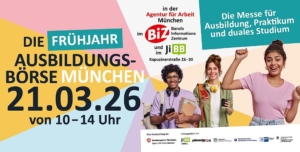
Training fair in Munich on March 21, 2026 with BOEHMERT & BOEHMERT

12. March 2026/in News

Spring training fair at the Employment Agency’s Career Information Center on March 21, 2026, from 10 a.m. to 2 p.m. We look forward to seeing you at booth number 13!

It’s almost that time again: the spring training fair at the Munich BiZ is opening its doors and our law firm will be there.

We can’t wait to show you the career opportunities at BOEHMERT & BOEHMERT. Come and get to know us. Find out what you can expect from an apprenticeship at our law firm.
And ask us as many questions as you like. After all, we want your transition from school to the world of work to be as positive and successful as possible.

We look forward to seeing you!


Spring training fair Munich

Berufsinformationszentrum (BiZ) der Agentur für Arbeit
Kapuzinerstraße 26-30
80337 München

Booth number 13

https://www.boehmert.de/wp-content/uploads/2026/03/Ausbildungsboerse-MUC-21_03_2026-1.jpg 506 1000 Petra Hettenkofer /wp-content/uploads/2022/04/boehmert_logo.svg Petra Hettenkofer2026-03-12 16:49:382026-03-17 15:47:44Training fair in Munich on March 21, 2026 with BOEHMERT & BOEHMERT

B&B IP Dialogue on Ku’damm on March 19, 2026, on the topic of green claims

10. March 2026/in Events

Start of the IP Dialogue series in Berlin in 2026 with the title “Green claims under the new legal situation – making sustainability communication legally compliant.”
During this IP Dialogue, aatorney at law Dr. Julian Wernicke and Dr. Sebastian Engels will explain the future requirements for sustainability labels and which general statements about the environment will no longer be permitted.

Read more
https://www.boehmert.de/wp-content/uploads/2025/09/Logo-IP-Dialog.png 693 800 Petra Hettenkofer /wp-content/uploads/2022/04/boehmert_logo.svg Petra Hettenkofer2026-03-10 14:47:582026-03-20 15:07:30B&B IP Dialogue on Ku’damm on March 19, 2026, on the topic of green claims
Dr. Michael Rüberg, Attorney at Law at BOEHMERT & BOEHMERT

FCJ “FRAND Objection III” and recent case law of the German District Courts: Further Clarification of Willingness and Security Requirements

5. March 2026/in IP-Update Licensing, Patent Litigation

Recent Case Law of the German District Courts

Recent case law from the Munich patent courts has further refined the requirements for raising a competition law-based FRAND defence against injunctive relief based on standard-essential patents. Several decisions of the Regional Court of Munich I in 2025 and 2026 address in particular the assessment of an implementer’s willingness to take a license, the role of partial payments and security, and the determination of a permissible FRAND licensing range on the basis of comparable license agreements.

In its judgment of 8 January 2026 (Regional Court of Munich I, case no. 7 O 5007/25), the court emphasized that the assessment of willingness to license depends not only on formal declarations but also on the implementer’s concrete conduct in negotiations. In particular, the court considered it highly relevant whether the implementer pays at least an undisputed portion of the licence fee or provides adequate security, as such conduct may demonstrate that the implementer is not engaging in hold-out behaviour.

In another judgment of 5 February 2026 (Regional Court of Munich I, case no. 7 O 7655/25), the same chamber further elaborated on its approach to determining a FRAND royalty corridor based on comparable licence agreements. According to the court, comparable agreements may serve as a benchmark for identifying a permissible range of licence rates within which an offer will generally be considered FRAND-compliant.

Similarly, in its decision of 22 January 2026 (Regional Court of Munich I, case no. 7 O 4102/25) concerning patents allegedly essential to the H.265/HEVC video coding standard, the court rejected a competition law compulsory licence defence and held that the defendant had not demonstrated conduct sufficient to establish a successful FRAND defence.

Earlier, the Regional Court of Munich I had also addressed the international dimension of SEP disputes. In its judgment of 26 November 2025 (Regional Court of Munich I, case no. 21 O 12112/25), the court held that the competition law assessment of FRAND obligations with respect to German patents must, in principle, be carried out by German courts. It therefore considered attempts to obtain a court-ordered “interim licence” from a foreign court affecting German patents to be incompatible with the territorial nature of patent rights.

Taken together, these decisions illustrate how German first-instance courts are increasingly translating the framework established by the Court of Justice of the European Union in Huawei v ZTE into concrete procedural and economic criteria. Against this background, the recent judgment of the German Federal Court of Justice is of particular significance.

FCJ “FRAND Objection III”

On 27 January 2026 (KZR 10/25), the Bundesgerichtshof dismissed HMD Global Oy’s appeal in the dispute with VoiceAge EVS GmbH. The judgment confirms the decisions of the Munich lower courts and further refines the standards governing FRAND defences against injunctive relief based on standard-essential patents.

The legal framework remains Article 102 TFEU and the principles developed by the Court of Justice of the European Union in Huawei v ZTE.

Background and procedural history

VoiceAge asserted claims based on a European patent declared essential to the EVS telecommunications standard. HMD argued that enforcement of the injunction would constitute an abuse of dominance, as it had been willing to take a licence on FRAND terms.

Both the Regional Court of Munich I and the Higher Regional Court of Munich rejected this defence, finding that HMD had not demonstrated sufficiently consistent willingness. The appeal raised, in particular, the question whether the Huawei framework must be applied in a strict chronological sequence and how security is to be assessed.

Overall assessment of negotiation conduct

The FCJ confirms that the Huawei obligations do not establish a rigid step-by-step sequence. Courts must assess the entire course of negotiations. An initial declaration of willingness is not decisive if subsequent conduct undermines its credibility.

Delays, inconsistent positions or tactical reservations may call into question the seriousness of the implementer’s engagement. The Court thus endorses a contextual evaluation focusing on coherence and continuity.

Substantive requirements for willingness

According to the judgment, willingness must be substantive rather than merely declaratory. It requires a clear and unconditional expression of intent to take a licence, combined with timely and reasoned engagement with the SEP holder’s offer and meaningful counter-offers.

The implementer bears the burden of demonstrating such conduct. Remaining ambiguities may operate to its detriment.

The role of security

The FCJ attaches particular importance to the provision of adequate security for ongoing use. In the case at hand, the security offered by HMD did not even fully correspond to its own counter-offer. On that basis alone, the Court rejected the FRAND defence without needing to examine in detail whether the claimant’s offer complied with FRAND.

Security therefore functions as an independent indicator of seriousness in negotiations.

No referral to Luxembourg

The Court declined to refer further questions to the Court of Justice of the European Union, considering the legal framework established in Huawei v ZTE sufficiently clear.

Practical implications

The decision confirms that FRAND defences in Germany remain demanding. Companies should ensure that willingness to license is clearly expressed and consistently reflected in their conduct. Negotiation correspondence is likely to be scrutinised in detail.

In addition, security arrangements should be considered at an early stage. Inadequate security may undermine the defence irrespective of the substantive assessment of licence terms.

Conclusion

In “FRAND Objection III”, the FCJ continues its conduct-focused approach in SEP cases and clarifies the substantive requirements for willingness and security. What ultimately matters is credible and economically supported readiness to conclude a licence agreement, rather than formal compliance with individual procedural steps.


https://www.boehmert.de/wp-content/uploads/2022/06/Rueberg-Michael-Portrait-1.jpg 667 1000 Lucia Biehl /wp-content/uploads/2022/04/boehmert_logo.svg Lucia Biehl2026-03-05 08:51:142026-03-06 09:03:47FCJ “FRAND Objection III” and recent case law of the German District Courts: Further Clarification of Willingness and Security Requirements
Graphic highlighting the designation ‘Chambers Contributor’ for the Global Practice Guides 2026 in Patent Litigation, framed by a laurel wreath

Patent litigation in Germany: Christoph Angerhausen, Dr. Daniel Herrmann and Dr. Michael Rüberg contribute once again to the Chambers Guide

4. March 2026/in Publications Patent Litigation

Current developments and practical experience in patent litigation in Germany

In the current 2026 edition of the Chambers Patent Litigation Guide, BOEHMERT & BOEHMERT partners Christoph Angerhausen (Patent Attorney, Dusseldorf), Dr. Daniel Herrmann (Patent Attorney, Frankfurt) and Dr. Michael Rüberg (Attorney at Law, Munich) are once again represented as authors of the chapter “Law & Practice – Germany”.

The contribution examines key aspects of patent litigation in Germany and provides a structured overview of the legal framework and its practical application. It addresses, among other topics, recent developments in case law, procedural particularities and strategic considerations relevant to both national and international proceedings.

The Chambers Patent Litigation Guide is published annually and is regarded as one of the leading global reference works in the field of patent enforcement. Edited by Chambers and Partners, the guide offers in-depth country reports and practice-oriented insights from leading practitioners.

The English-language contribution by the three patent experts is available online on the Chambers website.

https://www.boehmert.de/wp-content/uploads/2026/03/GPG_PATENT-LIT_Badge_2026_Contrib-S.png 333 400 Lucia Biehl /wp-content/uploads/2022/04/boehmert_logo.svg Lucia Biehl2026-03-04 09:36:512026-03-11 10:43:43Patent litigation in Germany: Christoph Angerhausen, Dr. Daniel Herrmann and Dr. Michael Rüberg contribute once again to the Chambers Guide

Latest posts

  • Gold trophy in front of bookshelf, symbol of awards and rankings
    WIPR Leaders 2026: Recog­nition of four BOEHMERT & BOEHMERT partners4. May 2026 - 13:24
  • Dr. Rudolf Böckenholt, Attorney at Law at BOEHMERT & BOEHMERT
    Dr. Rudolf Böckenholt in GRUR-Prax 8/2026 on the transparency of GTC in competition law4. May 2026 - 11:57
  • Holiday Notice May 01 and May 14, 202629. April 2026 - 8:15

Categories

Archive

Menu

  • Firm
  • Our Practice
  • Career
  • News & Events
  • FIND EXPERTS
  • LinkedIn

Informations

  • Press
  • Contact
  • Legal notice
  • Data Protection
  • General Terms and Conditions
  • Contact
  • Subscription B&B Bulletin

Legal Areas

  • Employee Inventions
  • Data Protection
  • Designs
  • Domains
  • Information Technology
  • Anti-Trust
  • Licensing
  • Trade Marks
  • Patent Valuation
  • Patents & Utility Models
  • Patent Litigation
  • Product Piracy
  • Copyright
  • Unfair Competition

© Copyright 2026– BOEHMERT & BOEHMERT

Scroll to top Scroll to top Scroll to top